Embarking
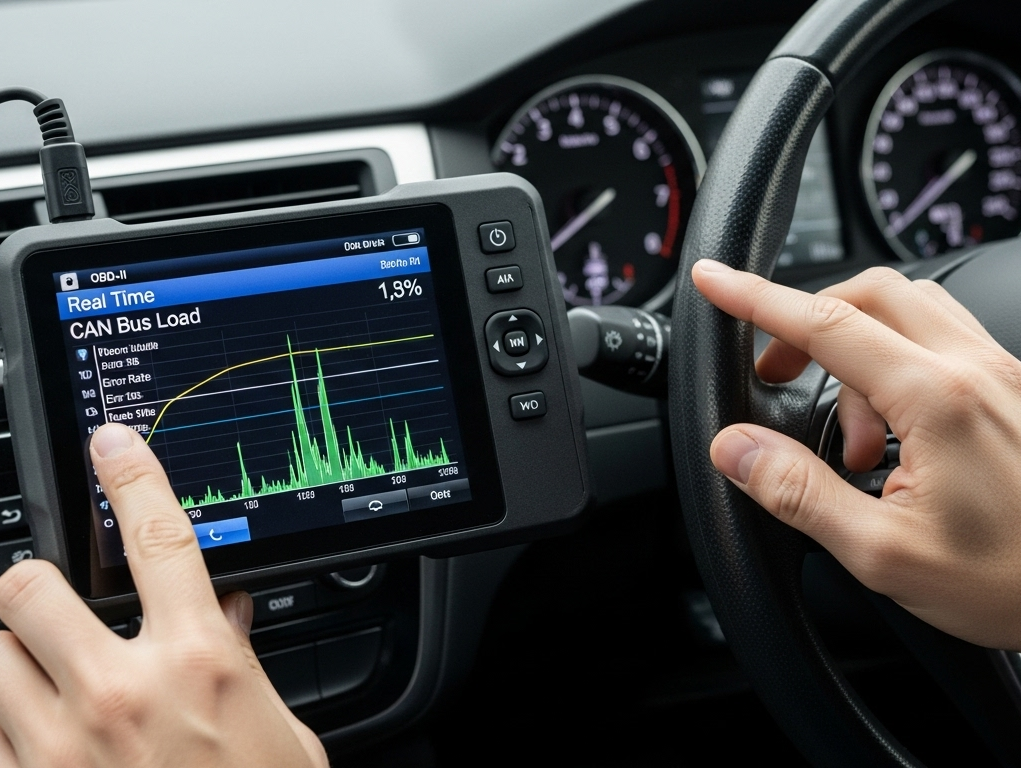
This escalating subtlety within current autos compels a comprehensive deep understanding of diagnostic tools, notably pertaining to On-Board Diagnostics II (OBD2) and Tire Pressure Monitoring Modules (TPMS). Within Europe, Asia, and the US, these advancements carry out using alternative frequencies. OBD2 norms are largely harmonized globally, primarily utilizing ISO 9141-50, KWP2000, CAN, and others, but regional implementations can present minor discrepancies. TPMS, however, is where significant frequency discrepancies arise. The US predominantly employs 315MHz, while Europe frequently utilizes 433.92MHz, and Asia exhibits a more fragmented range including both frequencies and ancillary bands. Ergo, valid diagnostic hardware must be supplied with the skill to read these diverse frequencies to allow effective repair and maintenance.
Interpreting TPMS Sensor Frequencies: A Global Guide (Europe, North America, Asia)
Understanding rubber surveying tool (TPMS) reader channels among the universe remains difficult. Typically, North districts largely utilize 315 MHz, nevertheless some recent vehicles use 433 MHz. In contrast, Europe and most of Asia generally perform on the 433 MHz spectrum, with some local variations surfacing chiefly in some Asian countries. As such, critical to confirm the legitimate channel in advance of purchasing TPMS readers to confirm compatibility and sidestep probable hurdles.
EV Diagnostic Tools: OBD2 Compatibility and TPMS Integration
State-of-the-art electrical car inspection gadgets are increasingly blending critical functionality, specifically concerning both normative On-Board Diagnostics II (OBD2) interface and Tire Pressure Monitoring System (TPMS) merging. Countless electric rides utilize OBD2 ports for accessing essential system data, empowering technicians and owners to discover potential shortcomings. Furthermore, consistent TPMS linking provides valid tire load reports, assisting to amplified safety and gas optimization. This synergy of OBD2 linkage and TPMS support demonstrates a consequential advance in electronically powered motorcar troubleshooting.
Tire Pressure Frequency Distinctions: The Continent vs. North American Territory vs. Oriental Region - A Thorough Review
Several frameworks responsible for monitoring tire load—TPMS—operate on particular radio bands, leading to substantial regional discrepancies. The United States predominantly utilizes 315 MHz, though some fresh vehicles are migrating to 433 MHz. European Union mandates 433.92 MHz, a particular frequency to preserve alignment across jurisdictions. Asia exhibits a diverse landscape, with selected states using 315 MHz, others 433 MHz, and still diverse zones employing a combination of both. This variation causes challenges for maintenance hubs and drivers when dealing with replacement TPMS units or diagnostic devices, calling for careful inspection of regional criteria to circumvent errors and establish proper serviceability of the TPMS.
Auto Scanners for Battery-Powered Autos: Tire Info Evaluation & Signal Processing
Current car evaluators are constantly advancing to assist electrically powered transport units, exclusively focusing on wheel pressure monitoring examination. Unlike fuel combustion transport units, electric transport present particular obstacles when it comes to wheel pressure system inspection. Many electric cars use alternative tire monitoring radio bands requiring the detector to unerringly process the wavelength in use. This functionality allows professionals to purely see tire info but also pinpoint the clear transmission being sent by the TPMS transmitters, facilitating in reliable review of malfunctions.
Europe Tire Monitoring Wavelengths: Which Wish to Recognize?
Understanding the world of machine TPMS can be a problem, primarily due to the varying wavelengths utilized across The EU, Asia, and the United States. European Union’s vehicles predominantly use 433.92 MHz, while various Asian countries employ 315 MHz and 433.92 MHz, creating a complex situation for mechanics. In the US, both 315 MHz and 433.92 MHz are frequently used, with 315 MHz being more dominant. Hence, understanding these regional differences is necessary for accurately troubleshooting TPMS deficiencies and selecting the optimal programming tools.
Progressing an Basics: Motor Vehicle Scanning, Electrified Motorcars, together with Tire Pressure Monitoring System Apparatus Frequency Determination
As professional vehicle experts, plainly comprehending certain fundamentals with respect to vehicle diagnostics, voltage-powered machine architecture, alongside tire pressure monitoring apparatus radio wave detection indicates specific vital progressive point. This subjects penetrate about basic methods, entailing tailored tools plus proficiency with the purpose of unerringly pinpoint plus rectify tough hurdles related rubber systems, charge network output, in addition to engine trouble messages. Besides, rightly locating pressure gauges module bands – usually diverge during separate labels including categories – is important in optimal setting.
EV Auto Assessment: Using OBD2 Scanners to Troubleshoot TPMS
Resolving Tire Pressure Monitoring Systems TPMS in electric vehicles EVs often includes more than plainly visual inspection. Modern OBD2 testers offer noticeable ability to get TPMS data and recognize potential failures. Utilizing these instruments, technicians can interpret fault codes, evaluate sensor reliability, and even implement sensor inspections, allowing for accurate diagnosis of system glitches and minimizing maintenance delays. The is especially beneficial given the ballooning complexity of EV networks.
Handling TPMS Wavelengths: A Detailed Handbook for the Continent, Asian Subcontinent, and US and Canada
Smoothly utilizing tire pressure monitoring systems across the span of Eurozone, the Asian Region, and The Americas needs a complete proficiency of the changing signal bands they work with. Differing from a uniform system, different zones usually employs specific ranges. As an example Eurozone largely bases on 3-1-5 MHz frequency and 433.92 Megahertz, while US and Canada usually depends on 315 electric vehicle scanner Megahertz though a few modern cars should feature 433.92 MHz band. Asia displays a more intricate landscape, with a range of frequency ranges operated, reliant on the state and transport maker.
- Check local legislations regarding TPMS frequency.
- View your automobile manual for specific frequency.
- Use a diagnostic tool ready to interpreting numerous bands.