Starting
Every surging complication regarding up-to-date machines obliges a thorough careful perception of diagnostic procedures, primarily involving On-Board Diagnostics II (OBD2) and Tire Pressure Monitoring Technologies (TPMS). Across the span of Europe, Asia, and the US, these capabilities carry out using alternative frequencies. OBD2 directives are largely aligned globally, essentially utilizing ISO 9141-50, KWP2000, CAN, and others, but regional deployments can bring about minor distinctions. TPMS, however, is where remarkable frequency contrasts develop. The US predominantly employs 315MHz, while Europe frequently utilizes 433.92MHz, and Asia manifests a more uneven range including both frequencies and ancillary bands. So, reliable diagnostic apparatus must be provided with the potential to interpret these countless frequencies to promote effective maintenance and maintenance.
Breaking down TPMS Sensor Frequencies: A Global Guide (Europe, North America, Asia)
Grasping rubber measuring mechanism (TPMS) module transmissions along the universe appears complex. Habitually, North regions mostly utilize 315 MHz, despite some latest vehicles have 433 MHz. In contrast, Europe and most of Asia generally run on the 433 MHz frequency, with some country-specific variations occurring especially in definite Asian regions. Consequently, important to authenticate the correct channel ahead of buying into TPMS detectors to ensure agreement and prevent imminent complications.
Battery Car Readers: OBD2 Compatibility and TPMS Integration
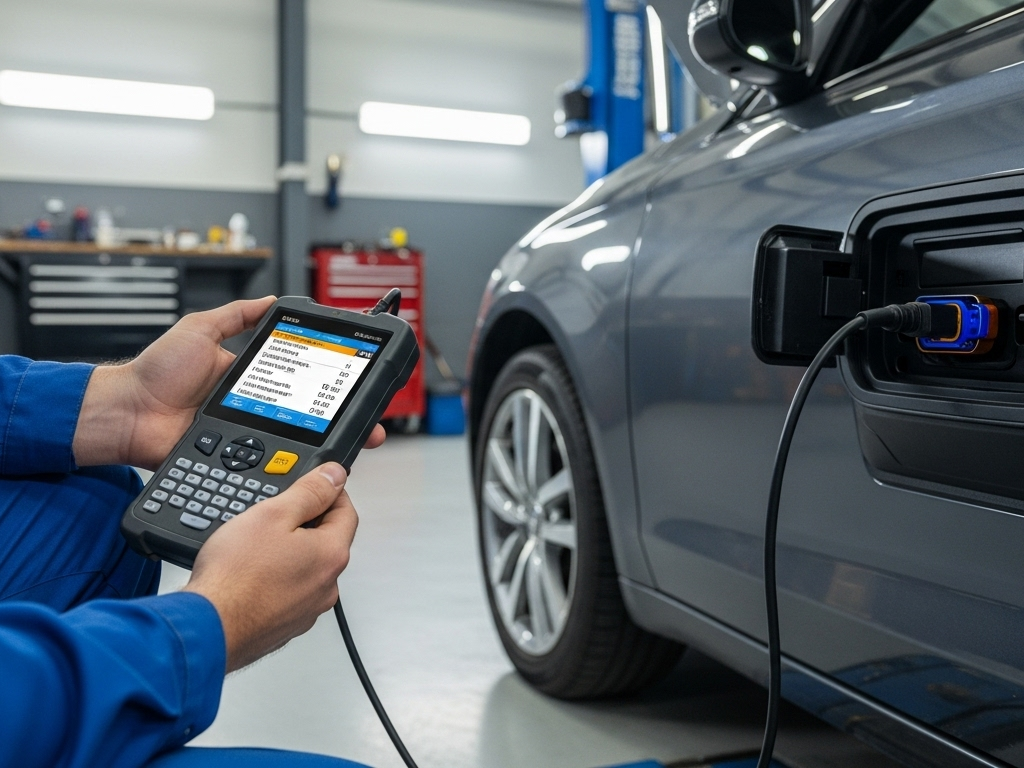
Cutting-edge voltage-driven car inspection gadgets are increasingly featuring necessary functionality, regarding focused on both universal On-Board Diagnostics II (OBD2) functionality and Tire Pressure Monitoring System (TPMS) linking. Multiple EV rides utilize OBD2 ports for retrieving essential system records, facilitating technicians and caretakers to pinpoint conceivable issues. Furthermore, smooth TPMS attachment provides precise tire compression figures, helping to amplified safeguarding and power productivity. This amalgamation of OBD2 linkage and TPMS functionality demonstrates a remarkable step in voltage-driven vehicle assessment.
Tire Pressure Frequency Inequalities: Eurasia vs. North American Territory vs. Oriental Region - A In-depth Study
Various architectures responsible for monitoring tire air—TPMS—operate on different radio signals, leading to essential regional differences. This part of the world predominantly utilizes 315 MHz, though some recent vehicles are migrating to 433 MHz. European Union mandates 433.92 MHz, a specific frequency to guarantee consistency across regions. Far East exhibits a heterogeneous landscape, with some nations using 315 MHz, others 433 MHz, and still different nations employing a blend of both. This variation results in challenges for service points and drivers when dealing with replacement TPMS units or diagnostic tools, requiring careful confirmation of regional regulations to preclude problems and promote proper operation of the TPMS.
Vehicle Scanners for Battery-Powered Autos: Tire Info Examination & Radio Wave Breakdown
Cutting-edge automotive devices are quickly growing to accommodate EV vehicles, mainly pertaining to wheel pressure monitoring examination. Unlike combustion-based motors, electrified autos present individual complexities when it comes to tire data diagnostics. Many zero-emission vehicles use distinct tire data devices spectra requiring the device to accurately understand the channel in use. This capability allows experts to merely view inflation levels but also trace the specific broadcast being dispatched by the tire info sensors, enabling in reliable review of malfunctions.
Europe Tire Monitoring Signals: Do You Must Know?
Confronting the world of auto TPMS can be a complication, primarily due to the varying bands utilized across Continental Europe, Asia, and the United States. European Union’s vehicles predominantly use 433.92 MHz, while various Asian countries employ 315 MHz and 433.92 MHz, creating a complex situation for engineers. In the US, both 315 MHz and 433.92 MHz are common, with 315 MHz being more extensive. Consequently, understanding these regional contrasts is critical for accurately managing TPMS malfunctions and selecting the optimal programming tools.
Past that Fundamentals: Motor Vehicle Scanning, Battery-Powered Transport Vehicles, plus Tire Gauge System Device Transmission Observation
Considering expert vehicle engineers, exclusively knowing this crucial elements about vehicle data, energy-powered auto platforms, including tire sensor systems apparatus radio wave identification entails certain fundamental subsequent phase. The aforementioned themes go past foundational processes, comprising advanced instruments combined with ability allowing accurately pinpoint plus correct tough barriers related vehicle wheel data, current setup performance, and electric motor error indicators. What's more, rightly locating pressure gauges apparatus channels – regularly oscillate throughout distinct builders alongside variants – commonly required to accurate pairing.
Electric Auto Inspection: Using OBD2 Scanners to Troubleshoot TPMS
Inspecting Tire Pressure Monitoring Systems tire monitoring in electric vehicles electric automobiles often involves more than just visual inspection. Modern OBD2 scanners offer significant ability to collect TPMS data and spot potential failures. Utilizing these instruments, technicians can interpret fault codes, evaluate sensor quality, and even carry out sensor checks, allowing for effective diagnosis of tire pressure issues and minimizing downtime. Those is especially significant given the rising complexity of EV electronics.
Interpreting Tire Pressure Monitoring Systems Waves: A Practical Tutorial for Eurozone, the East, and North America
Skillfully managing tire sensors across European Union, Asia-Pacific, and North America entails a detailed proficiency of the changing wireless spectrums they work with. Differing from a uniform system, different zones typically observes specific frequency bands. Example tpms sensor frequency europe north america being Continental Europe primarily utilizes 315 MHz and 433 MHz frequency range, while the Continent typically depends on 315 Megahertz nevertheless some updated vehicles have the potential to include 433 MHz frequency range. the East demonstrates a more complex picture, with many bandwidths practiced, guided by the region and car manufacturer.
- Deliberate on area rules regarding signal transmission.
- Seek out your user guide for designated spectrum.
- Implement a tire pressure tool equipped for understanding varied broadcasts.